
Heart to Table: Corn and Black Bean Salad
This September, our Heart to Table theme is "Faithful in the In-Between" — a reminder that "to everything there is a season, and a time to every purpose under heaven" (Ecclesiastes 3:1). September gently ushers us from summer's fullness into autumn's quiet preparation, an in-between space where change is subtle but steady.
At Crossfire Ministries, we believe food is more than a list of ingredients. Food can offer comfort. It can help stretch a household budget. It can bring people back to the table. And a simple recipe, built for a season of transition, can become one small act of stability for a family in the middle of their own in-between.
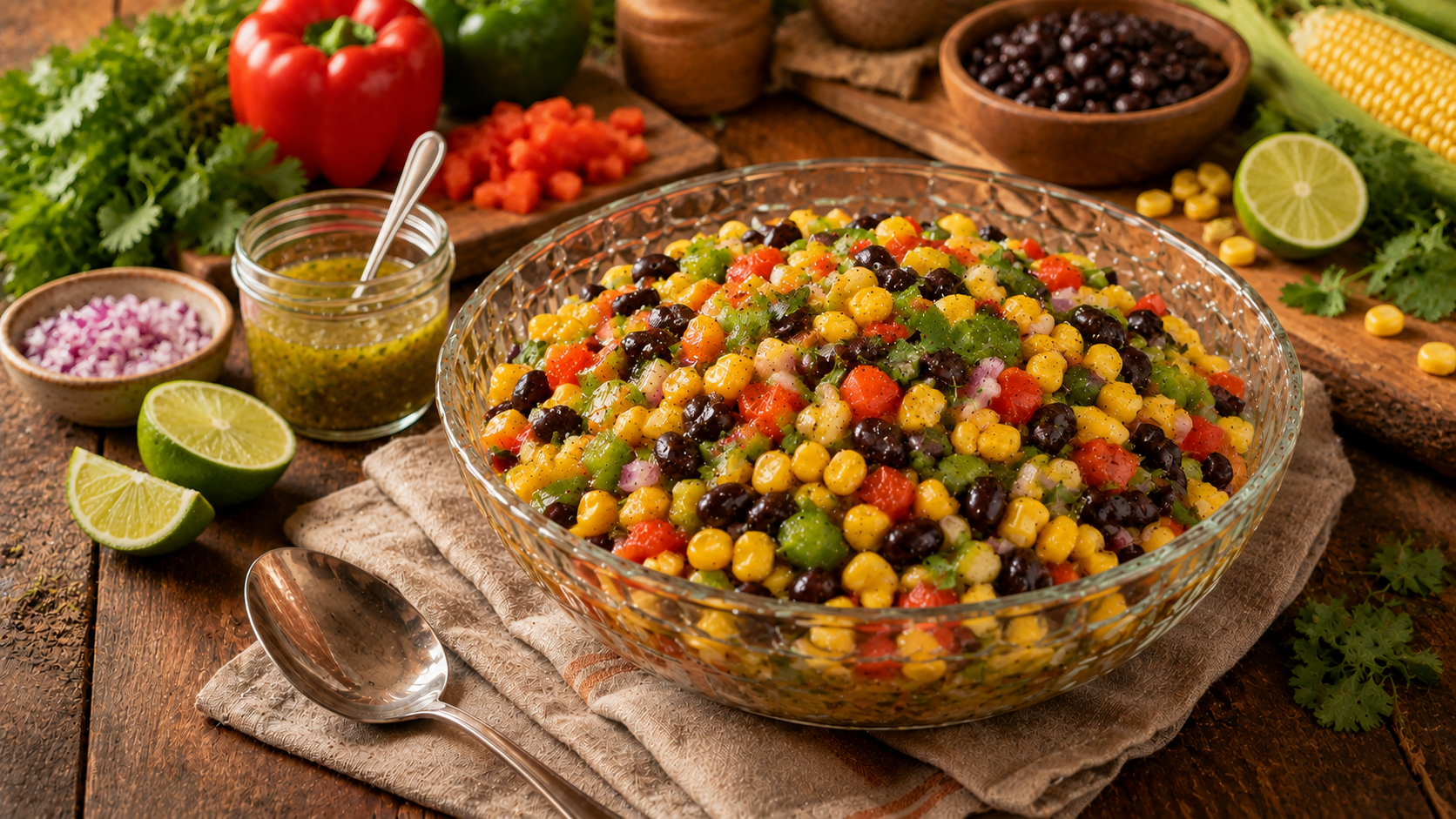
This month's Heart to Table recipe, Corn and Black Bean Salad, is a no-cook dish that makes the most of late-summer produce as the seasons begin to shift.
The Heart Behind It
Thrift is not about living without. It is about living with intention.
Corn, black beans, a bell pepper, a little onion, and cilantro — on their own, ordinary pantry and garden staples. Stirred together with a simple dressing, they become six servings that keep well and travel easily, no stove required. Just as September invites us to prepare for what's ahead, this recipe practices that same preparation: stewarding what's on hand, stretching it further, and making sure nothing goes to waste.
This is part of the heart behind Crossfire's no-cost grocery store. Guests are welcomed into a grocery environment where they can choose the food their families need most. That dignity of choice matters because every household knows its own table best — and because worth was never something to be earned or rationed in the first place.
From heart to table, simple food can become an offering of care.
A Devotional Thought
"To everything there is a season, and a time to every purpose under heaven." — Ecclesiastes 3:1
The in-between can feel uncertain. It is where we wait, wonder, and sometimes wrestle. But it's also where God's faithfulness shines. He doesn't just meet us at the beginning or the end — He walks with us through the middle. In the waiting, He is working. In the shifting, He is steady.
At Crossfire, we see this truth lived out every day. Many who come through our doors are navigating their own in-between seasons — between jobs, between paychecks, between stability and struggle. These are tender places, and they can feel overwhelming. Yet even here, God is present. Every grocery cart filled, every sample offered, every conversation, is a reminder that He provides through His people.
"Wait on the Lord; be of good courage, and He shall strengthen your heart; wait, I say, on the Lord!" (Psalm 27:14). Whether you're navigating change, holding hope, or simply adjusting to a new rhythm, take heart: the God of every season is faithful in the in-between.
—RECIPE—
Corn and Black Bean Salad
PREP TIME: 15 minutes
COOK TIME: 0 minutes
SERVINGS: 6 servings
INGREDIENTS:
2 cups corn kernels (fresh/frozen/canned)
1 can black beans (drained and rinsed)
1 bell pepper (any color, diced)
½ red onion (finely chopped)
¼ cup cilantro (fresh, chopped)
¼ cup olive oil
2 tablespoons lime juice
1 teaspoon cumin (ground)
Salt and pepper to taste
OPTIONAL ADD-INS:
Hot peppers of your choice (diced)
1 clove fresh garlic (minced)
INSTRUCTIONS:
If using fresh corn, blanch and dash into cold water before adding to salad. If using canned corn, drain thoroughly.
In a large bowl, combine corn, black beans, bell pepper, red onion, cilantro and any hot pepper you desire.
In a small bowl, whisk together the olive oil, lime juice, cumin, salt, pepper, and minced garlic (if using).
Pour the dressing over the salad and toss to combine.
Serve chilled or at room temperature.
A Simple Kitchen Note:
Because this salad needs no stove or oven, it's an easy one to pull together on a busy weeknight or to bring along to a potluck or shared meal. It keeps well chilled, so a single batch can cover a few days of lunches or sides without extra effort.
It's also a practical way to use up the last of a garden's corn, peppers, and onions before the season turns — nothing goes to waste, and nothing requires a special trip to the store.
Garden Overflow: What to Do with Too Much Produce
When the garden gives generously, it's easy to feel overwhelmed. But excess produce is a gift — one that can nourish your household, bless your neighbors, and even preserve joy for the months ahead.
Zucchini can become savory fritters, sweet breads, or be frozen in 1-cup portions for later. Tomatoes can be roasted into a freezer-friendly sauce, turned into fresh salsa, or slow-roasted sun-dried style. Peppers can be stuffed and baked, quick-pickled, or sliced and frozen flat for easy stir-fries. Herbs can be frozen in oil, dried and jarred into seasoning blends, or steeped into infused vinegars. And when there's still more than one household can use, the simplest answer is to share it — a basket for a neighbor, or a swap with friends who have their own surplus.
"And God is able to make all grace abound toward you, that you, always having all sufficiency in all things, may have an abundance for every good work" (2 Corinthians 9:8). Just as a garden's abundance is meant to be shared, so is every gift entrusted to us — a small picture of the stewardship at the heart of Crossfire's ministry.
From Heart to Table
At Crossfire, we know many families are doing careful math every week. Groceries, rent, utilities, gas, school supplies, and medical bills can all press at the same time.
That is why no-cost groceries, clothing, and care matter.
Every shopping visit should offer more than food. It should offer hospitality, dignity, and practical compassion. Guests choose what their households need, and those choices help bring food from heart to table.
If you or someone you know could use support, Crossfire Ministries welcomes guests with care and dignity.
If you would like to help, your generosity helps provide no-cost groceries, clothing, and care for neighbors in tight places.
